

Home
Shop

Hot deals just for you this weekend

Recently Viewed

How to Reduce Printing Work and Go Digital Save Time & Money

Still juggling stacks of papers, chasing signatures, and printing the same forms over and over?
It’s time to move faster, smarter, and paper-free.

Modern offices are shifting toward digital document workflows scanning, sharing, and securely storing files instead of relying on paper. The best part? You don’t need expensive software or advanced IT skills to get started.

In this blog, we’ll explore practical ways to reduce printing work, digitize your documents, and save big on cost, time, and effort with solutions trusted by thousands of Indian organizations.

What Does ‘Going Digital’ Mean for Offices?

Going digital means converting your paper-based records and processes into organized, searchable, and shareable digital files.

This approach eliminates the need for endless printouts, manual filing, and bulky storage, while improving accessibility and workflow transparency.

Why It Matters

  • Saves paper and printing costs
  • Reduces clutter and improves space utilization
  • Speeds up approvals and communication
  • Increases transparency and accountability

Whether you’re managing student records, invoices, or patient files, going digital ensures your documents are always just a click away.

How to Go Digital — Step-by-Step Approach

1. Start with Scanning

Use a multifunction printer (MFP) with scan to email or cloud upload features to convert paper documents into PDFs.
Hi-Tech offers Canon, HP, and Epson copiers that make high-speed scanning effortless.

2. Organize & Store

Once scanned, save files in structured folders or cloud platforms like Google Drive, OneDrive, or Dropbox.
Pro Tip: Create folders by department or date for easy retrieval.

3. Use Digital Signatures

Replace physical approvals with digital signing tools such as Adobe Sign or DigiLocker eSign.
This helps you eliminate printouts for internal approvals or vendor contracts.

4. Automate Repetitive Tasks

Integrate a Document Management System (DMS) or ERP tool to automate sorting, naming, and filing of invoices, receipts, or HR documents.

5. Go Paperless in Meetings

Encourage staff to use tablets or laptops for presentations, reports, or meeting notes instead of printing hard copies.
This not only saves paper but also fosters collaboration through shared documents.

Specifications & Key Components (Tools That Help)

🔹 Multifunction Photocopiers

Brands: Canon, HP, Epson

  • Print, scan, copy, and share documents instantly
  • Support for network and wireless scanning
  • Built-in cloud and email integration

🔹 Document Management Systems (DMS)

  • Centralized file access and sharing
  • Automated sorting and version tracking
  • User permissions and audit trails

🔹 Hi-Tech Document Solutions

Hi-Tech provides end-to-end support for digital transformation:

  • Scanning setup and network integration
  • AMC and maintenance for office equipment
  • Secure backup and recovery solutions

With Hi-Tech, you get everything from devices to support under one roof.

Benefits of Reducing Printing & Going Digital

✅ Cost Savings:
Less paper, toner, and printer maintenance means lower monthly expenses.

✅ Time Efficiency:
Instant access to files — no more manual searching through cabinets.

✅ Data Security:
Protect sensitive information with encryption and restricted access.

✅ Eco-Friendly:
Cut paper waste and energy use, contributing to sustainability goals.

✅ Mobility & Flexibility:
Access your files anywhere — at home, office, or on the go.


Use Cases in the Indian Context

🏫 Schools & Colleges – Digitize student records, exam reports, and circulars for faster administration.
🏥 Hospitals & Clinics – Store and access patient data securely with instant retrieval.
🏢 Banks & Offices – Simplify document trails, audits, and approvals with minimal paperwork.
🏭 Industries & Manufacturing Units – Maintain invoices, dispatch reports, and inspection records digitally.
🏛️ Government Departments – Implement e-Office systems to speed up inter-departmental approvals.


Frequently Asked Questions (FAQs)

Q1. How can a small office start going digital affordably?
➡ Start by using your existing copier’s scan function to digitize documents. No complex setup needed.

Q2. Do we need special software for document management?
➡ Not necessarily. Cloud storage like Google Drive works well for small setups. DMS adds automation for larger teams.

Q3. Can Hi-Tech Enterprises help set up digital document solutions?
➡ Absolutely. Hi-Tech provides MFPs, scanners, DMS solutions, and AMC support for a complete digital office setup.

Q4. Is going digital secure?
➡ Yes. Using password protection, encryption, and access control keeps your files safe from unauthorized access.

Conclusion

Digital transformation isn’t just for big companies it’s for every organization that wants to save money, time, and office space.
By simply scanning, storing, and managing documents digitally, you can make your office more efficient and environmentally responsible.

👉 Talk to Hi-Tech to explore scanner-enabled copiers, DMS setups, and digital document integration for your business.
Let’s help you move forward faster, smarter, and paper-free.
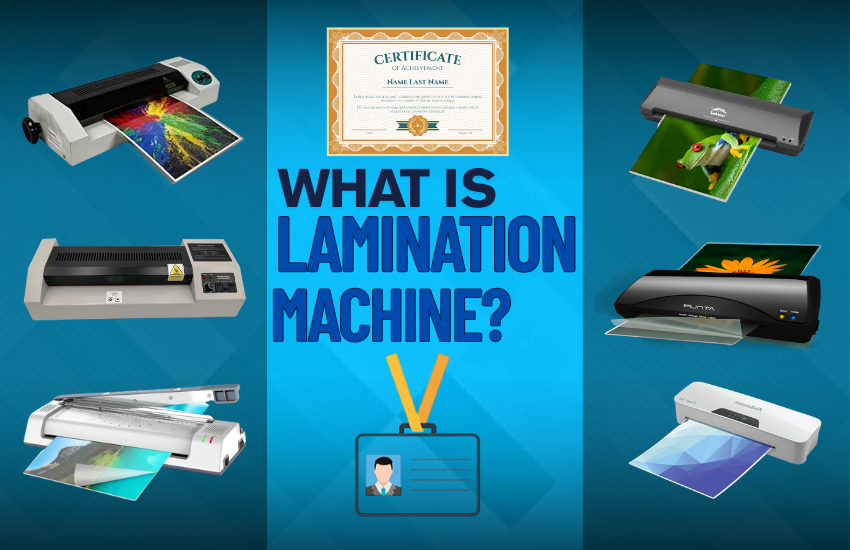
Document Lamination Machines in India Complete Protection Guide

     In India’s humid climate, important documents often face damage from moisture, dust, and frequent handling. A document lamination machine provides the perfect solution by sealing papers in protective plastic films, preserving them for years.

From school ID cards to office certificates and medical reports, laminators are becoming essential across sectors. 

What is a Document Lamination Machine?
lamination machine bonds plastic film to documents using heat or pressure, creating a durable, waterproof seal.

Types of Lamination Machines

TypeBest ForProsCons
Hot LaminationFrequent use (offices/schools)Strong seal, glossy finishNot heat-sensitive docs
Cold LaminationPhotos, heat-sensitive itemsNo heat damageLess durable
Roll LaminatorsBulk lamination (posters, banners)High speed, wide formatExpensive
Pouch LaminatorsIDs, certificates (home/office)Compact, affordableLimited to pouch sizes

Pro Tip: For Indian schools, Fellowes Pixel ‎A4 are ideal for ID cards and certificates.

How Does a Lamination Machine Work?

Step-by-Step Process
Insert Document – Place in a laminating pouch or between film rolls.
Heat/Pressure Application – Hot laminators melt adhesive; cold laminators use pressure.
Sealing – Edges are sealed airtight.
Cooling – Forms a rigid, protected layer.

Key Components
Heating Rollers – For hot lamination (120°C–180°C).
Pressure Rollers – For cold lamination.
Adjustable Temperature – Prevents overheating.

Hot vs. Cold Lamination
Hot: Durable but unsuitable for photos/thermal paper.
Cold: Safe for all materials but less sturdy.

Benefits of Lamination
Water & Dustproof – Protects against humidity/monsoons.
Tear-Resistant – Ideal for frequently handled documents.
Professional Look – Glossy/matte finishes enhance appearance.
Cost-Effective – Avoids reprinting damaged docs.
Versatile – Works on paper, photos, fabric, and more.

Industry Applications in India

Educational Institutions
Laminating ID cards, certificates, and exam materials.
Protecting library books and flashcards from wear and tear.
Creating durable classroom charts and visual aids.

Corporate Offices
Preserving business cards, training manuals, and contracts.
Laminating employee badges and access cards.
Securing important company policies and notices.

Healthcare & Hospitals
Waterproofing medical reports and prescriptions.
Laminating patient ID cards for long-term use.
Protecting frequently referenced health charts.

Government & Legal Sector
Preserving official records and land documents.
Laminating identity proofs and licenses.
Securing court evidence and affidavits.

Banking & Finance
Protecting loan agreements and account statements.
Laminating cheque copies for record-keeping.
Creating durable customer service desk guides.

Retail & Small Businesses
Waterproofing price tags and menu cards.
Laminating promotional posters and signage.
Preserving loyalty cards and discount coupons.

Printing & Stationery Shops
Offering lamination services to customers.
Bulk laminating wedding invites and certificates.
Protecting artwork and photo prints.

FAQs (Common Questions)

Q1. Can I laminate a passport or currency note?
A: No, Laminating government-issued IDs/currency is illegal in India.

Q2. What’s the cost of a laminator in India?
A: ₹2,000 (basic) to ₹50,000+ (commercial roll laminators).

Q3. Which thickness (microns) is best?
A: 75-125μ for cards, 250μ+ for posters.

Conclusion
Lamination machines are crucial for protecting valuable documents in India’s challenging climate. Whether for schools, offices, or businesses, the right laminator ensures longevity and professionalism.

Ready to preserve your documents? Browse top lamination machines or contact HITECH for expert advice!

Document Scanners in India: The Complete Guide to Digitizing Your Workflow for Smart Office

     In today’s digital era, document scanners have become essential tools for businesses, educational institutions, and government offices across India. With the rise of paperless workflows and digital record-keeping, scanners help convert physical documents into secure, searchable, and easily shareable digital files.

From small businesses digitizing invoices to hospitals managing patient records, document scanners improve efficiency, reduce storage costs, and enhance security. 

What is a Document Scanner?
document scanner is an electronic device that captures images or text from physical documents and converts them into digital formats(PDF, JPEG, Tiff etc.). Unlike traditional photocopiers, scanners store files electronically, making them easier to edit, share, and archive.

Types of Document Scanners
How Does a Document Scanner Work?

Step-by-Step Scanning Process

Document Placement– Insert paper into a sheet-fed scanner or place it on a flatbed.
Image Capture– A sensor (CIS or CCD) scans the document line by line.
Image Processing– Software enhances clarity, removes shadows, and adjusts colors.
OCR (Optical Character Recognition)– Converts scanned text into editable/searchable digital text.
Output– Saves files in PDF, JPEG, or cloud storage (Google Drive, Dropbox).

Traditional vs. Smart Scanners
Traditional Scanners – Require a computer connection.
Smart Scanners – WIFI-enabled, direct cloud uploads 

Benefits of Using a Document Scanner
Faster Document Management– Scan 50+ pages per minute vs. manual filing.
Reduced Paper Clutter– Save up to 60% office space by going digital.
Enhanced Security – Password-protect sensitive files (e.g., Aadhaar, PAN scans, Confidential Agreements).
Searchable Text (OCR) – Instantly find keywords in scanned contracts.
Eco-Friendly – Cuts paper waste, supports India’s Digital India mission.

Industry Applications in India

Corporate & Business
Automates GST invoice processing with 30+ page/minute scanners for faster compliance
Enables secure digital archiving of employee records with password-protected PDFs
Facilitates paperless board meetings by scanning contracts for e-signatures

Education & Research
Digitizes rare library books without damage using non-contact overhead scanners
Streamlines exam paper evaluation with auto-feeding answer sheet scanners
Creates accessible study materials by converting printed content to searchable PDFs

Healthcare
Securely scans patient records with HIPAA-compliant document management systems
Digitizes prescription histories using medical-grade OCR technology
Archives lab reports with barcode recognition for easy retrieval

Government & Legal
Preserves land records using heavy-duty archival scanners (600 DPI + resolution)
Digitizes court evidence with tamper-proof audit trails
Processes RTI applications faster with bulk document scanning

Banking & Finance
Accelerates account opening with auto-cropping KYC document scanners
Processes cheque clearance using MICR-enabled scanners
Digitizes loan applications with smart page detection technology

Retail & Ecommerce
Manages GST invoices efficiently with cloud-connected scanners
Digitizes warranty cards using mobile scanning apps
Archives vendor contracts with auto-filing metadata tagging

FAQs (Common Questions)

Q1. Which scanner is best for home use in India?
A: Portable scanners (like Xerox Mobile Scanner

Q2. Can I scan directly to WhatsApp or Google Drive?
A: Yes! WIFI scanners support cloud uploads.

Q3. What’s the lifespan of a scanner?
A: 5–10 years with proper maintenance (clean rollers, avoid dust).

Conclusion
Document scanners are no longer a luxury but a necessity for Indian businesses and institutions. Whether you need to archive legal documents, streamline hospital records, or manage school paperwork, the right scanner boosts productivity and cuts costs.

Ready to go paperless? Browse India’s top-rated document scanners or contact HITECH for a free consultation!

Back to Top
Product has been added to your cart